Ask what a rupee is and the honest answer is a claim on an institution. Ask what a dirham is and the answer is a quantity of silver you can put on a scale. The difference sounds academic until the institution needs money and the scale does not change.
A weight, not a promise
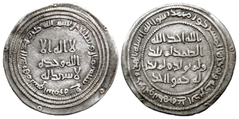
For most of recorded history the unit of account was a unit of mass. The Qur'anic dinar and dirham were not issued by a treasury with a monetary policy; they were weights of gold and silver whose purity was attested by whoever struck them. A mint's job was narrow and honest: put the right weight in the coin and say so on its face.
The sheep test
The hadith literature prices a sheep at a dinar. Fourteen centuries later, 4.25 grams of gold still buys a sheep in most markets on earth. No paper currency has held a single price for a single century, let alone fourteen. That is not nostalgia; it is a measurement, and anyone can repeat it.
The rupee buys a small fraction today of what it bought a generation ago. The gold price in rupees over the same period did not rise because gold became more useful; it rose because the unit of measurement shrank. Pricing in metal removes the illusion.
What riba does to a currency
“And Allah has permitted trade and forbidden usury.” Al-Baqarah 2:275
Interest and issuance are the same mechanism seen from two ends. When money can be created against a debt, the quantity of money is set by how much debt is convenient, and the value of everyone's savings is a residual. A metal coin cannot be issued against a promise. It has to be dug up, refined and struck.
The dinar of Madina
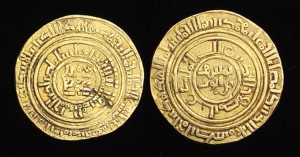
The Prophet ﷺ used the coins of Byzantium and Persia by weight, and the first properly Islamic dinar came later, under Abd al-Malik. What made it Islamic was not ornament but honesty of weight, and the refusal to debase, which is why Muslim traders were trusted from Córdoba to Guangzhou.
Holding it yourself
A certificate for gold in someone's vault is a promise again. The point of the coin is that it is in your hand: divisible, recognisable, and worth its metal in any city. That is the whole reason this mint exists, and why we buy our coins back.